


Die Casting
Why Choose Us
Custom Solutions
Offers personalized services to meet unique client specifications and demands.
Quality Control
Strict adherence to quality management systems to ensure consistent product quality and reliability.
Experienced Professionals
A team of skilled engineers and technicians with extensive experience in the metal industry.
Competitive Pricing
Provides cost-effective solutions without sacrificing product quality or service.
-
 Cast Aluminum PartsAdd to Inquiry
 -

-
 Gravity Die CastingAdd to Inquiry
 -
 Aluminium Pressure Die CastingAluminum die casting is a highly versatile manufacturing process that involves injecting molten aluminum into a mold cavity under high pressure. Once the aluminum cools and solidifies, the mold isAdd to Inquiry
 -
 Die cast aluminum partsMaterial: AlSi12 or A380 Process: Die casting then cnc machining, ensuring full dimensions tolerance qualified. Unit weight is 400g or so.Add to Inquiry
 -
 Die Casting PartsThe die casting aluminum AlSi10Mg end cover and gravity cast aluminum 4-pass body are perfectly assembled together to form the accessories of combing irrigation equipment. Can also be used forAdd to Inquiry
 -
Aluminium Pressure Die CastingWe have 20 years of professional experience in producing all kinds of castings and selling them in Europe and America.Add to Inquiry
-
 Aluminium Casting ProductsWe have over 20 years of experience manufacturing and exporting to Northern America and Europe.Add to Inquiry
 -
 Die cast aluminum alloy fire fittingsWe have over 20 years of experience manufacturing and exporting to Northern America and Europe.Add to Inquiry
 -
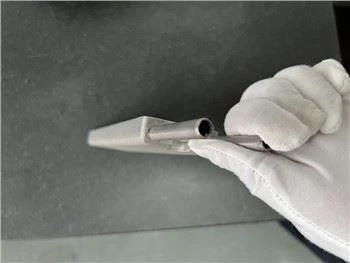 Aluminum Die Casting ProductsDalian Innovation Metal Co., LTD., in China’s Casting Base. We are a professional manufacturer of cast iron (gray iron, ductile iron), cast steel (alloy steel, carbon steel), stainless steel,Add to Inquiry
 -
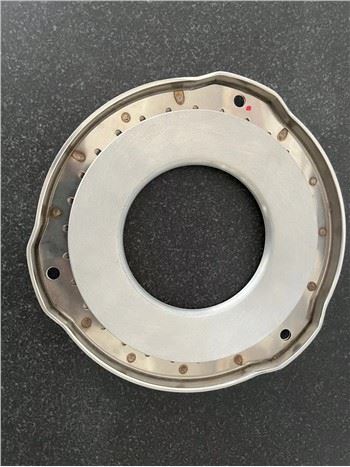 Die Casting With Stamping Assembly SUS 304, SUS301 Stainl...Material:SUS304,SUS301Process: Die casting and stamping, assembly together.Add to Inquiry
 -
 Permanent Mold CastingWe have over 20 years of experience manufacturing and exporting to Northern America and Europe.Add to Inquiry


- Tel: 86-411-83673369
Machining Factory: DALIAN HENGYI MACHINERY CO., LTD.
Yingchengzi Industrial Park, Ganjingzi District, Dalian
Factory Address: No. 68 Qianyang Road, Donggang, Liaoning province, China
- Office Address: 1605B, Chengda Building, No.71 Renmin Road, Dalian,China

Die casting is a process in which molten material is poured or forced into a mold cavity. This negative shape approach is identical in principle to all molding and casting processes, but it differs in almost every essential detail. The hardened tool-steel parts that form the cavity are pressed together by a hydraulic press, ensuring the closure faces meet precisely as a seal. Some parts require that the tool be heated at this point, while others form better with the cavity cold.
What Are the Different Types of Die Casting Processes?
Cold-Chamber Die Casting
Cold chamber die casting is used for higher melt-point metals like aluminum and lower-volume production. The injection chamber is charged and injected with molten metal. The chamber relies on the heat of the charge to make a stable processing temperature. This is a lower cost to set up and requires less maintenance but can produce more variability as the production rate stabilizes, leading to a good injection temperature in time.
Hot-Chamber Die Casting
A hot chamber or goose-neck casting is the more widely used process. It is better suited to higher volume but requires more system costs and more maintenance to preserve good production quality. The injection chamber is immersed in the molten bath it is fed from, maintaining charge temperature levels at the optimum for chamber fill.
What Materials Are Used in Die Casting?
Magnesium
Magnesium alloys are widely used for lightweight and high-strength parts. There are limitations in the processing, but magnesium alloys can achieve among the thinnest sections in die casting, because of very low viscosity in the melt.
Zinc
Zinc is very widely die-cast for many lower-strength applications. Zinc and commercial alloys it is a major constituent of are low-cost, easily cast, and sufficiently strong for many components such as enclosures, toys, etc.
Copper
Copper is not widely used in die casting, as it has a tendency towards cracking. It requires a high melt temperature, creating increased thermal shock in the tooling. When it is die-cast, it requires careful handling and a high-pressure process. For more information, see our guide on Copper.
Pewter
Pewter is a soft alloy, mainly tin, with antimony and traces of copper and bismuth. It is used purely for decorative objects and die casts easily in low-pressure equipment.
Aluminum
Aluminum alloys are by far the most important materials in volume die-cast production. They respond best to a hot chamber and high pressure—or more recently vacuum die casting—and provide moderate to high strength and high precision parts. Aluminum alloys are still critically useful in lower-tech processes, too.
Lead
ROHS has resulted in a significant reduction in the use of lead parts. They, however, remain critically important in the manufacture of (ICE) automotive battery parts, particularly terminals. Much development in lead die casting has improved overall automation and process speeds—developments that have fed through to other materials processing.
Tin-Based Alloys
Tin-based alloys impose very low wear and stress on tools due to low viscosity and melting point. While high-tin alloys (other than pewter) are rarely used now, the need does arise and specialists exist to serve in this.
What Are the Limitations of Die Casting?
Are susceptible to shock loading and sensitive to high loads. Parts must be carefully designed with these limits (and a factor of safety, FOS) in mind, to ensure good part service life.
Typical tool costs start at $10,000 for a small part and rise rapidly with component size. Typical tool life between major services (resurfacing, new bearings, etc.) is around 100 to 150k shots.
Non-ferrous metals can only be die cast at lower melting temperatures.
Die casting can easily generate porosity in parts when the casting pressure is low (gravity die casting).
Only limited undercuts are possible, and these increase tooling costs and reduce service life. Most die-cast tools aim for open and shut—all features being in the line of draw/ejection. Where draws are required, the part design must flex to accommodate tool robustness and simplicity.
What Are the Applications of Die Casting?
Aerospace: A wide range of engines, seating, interior fitting, cockpit control, and other parts are die-cast in aluminum.
Toys: Many toys were formerly manufactured from die-cast zinc alloys such as ZAMAK (formerly MAZAK). This process is still widely used despite plastics taking over much of the sector.
Automotive: Many ICE and EV car parts are made by automotive die casting: major engine/motor components, gearbox/differential housings, vehicle wheels, thermostat housings, suspension parts, interior strength members, and more.
Electronics: Enclosures, heat sinks, hardware.
Military: Vehicle, weapon, and system components.
Furniture: Chair legs, decorative parts, joiners.
Consumer: Product heat-distribution chassis, enclosures, decorative and structural parts.
Die Casting Steps
The company conducted a competitive advantage analysis to identify its strengths and weaknesses compared to its rivals.
Preparation of the Die
To prepare the die for casting, it is sprayed with a lubricant or releasing agent. Lubricants allow for clean part release by placing a film over the part. To make application easy, the lubricating agent is mixed with water that evaporates when sprayed on the heated steel die.
01
Clamping the Die
The halves of the die are clamped together under high pressure. The amount of force is determined by the machine.
02
Cooling
Cooling time depends on the type of metal and the temperature at which it will solidify. The geometry and wall thickness of the part are also factors.
03
Ejection
The halves of the mold are separated, and an ejection mechanism forces the part out of the die. The amount of force for removal has to be carefully monitored.
04
Trimming
Flashing (a thin portion of metal around the edge of a casting) is removed, known as deflashing, which is excess material such as metal that may have seeped between the die halves or runners.
05
How Does Die Casting Work?
The die casting process involves several steps, including mould design, metal preparation, injection, casting, and finishing.
The initial step in the die casting process is creating a mould called a die. This mould is usually made from steel or aluminium and is designed to withstand the high temperatures and pressures of the die casting process.
The mould design begins with developing a CAD design of the required mould. This design is then used to create a mould by CNC machining, which is further used in the casting process.
Finishing Process
The final step in the process is to finish the part. Surface finishing plays a vital role in die casting, as it can impact the durability and function of the part. Standard finishing processes include anodizing, powder coating, wet plating, and many more.
Metal Preparation
The next step is to prepare the metal for injection. This metal is typically an alloy, such as aluminium, magnesium, or zinc. The metal is melted in a furnace and then poured into a ladle.
Injection Process
Once the metal is in a liquid state, it is injected into the mould under high pressure. The molten metal fills the mould cavity and cools to create the desired shape.
Casting Process
After the metal has cooled and hardened, the mould is opened, and the part is ejected. Ensure that the part has cooled entirely before handling to avoid any potential injuries.
Advantages of Die Casting
Complex shapes: Die casting is a process that can produce complex shapes with tight tolerances
Versatility: The process is versatile and can be used to cast a variety of metals, including aluminium, zinc, and magnesium
High production rate: It is a relatively fast process, which can be an advantage when time is of the essence
Cost-efficient: The process is also relatively inexpensive, making it a cost-effective option for many applications
Repeatability: It also allows for a high degree of repeatability, meaning that parts can be manufactured to precise specifications.
Steps Involved In The Die Casting Operation
Create Mold
First, computer-aided design (CAD) software is employed to design the die mold. This software allows the creation of a three-dimensional (3D) model of the die mold. Once the design is finalized, the actual die mold can be created. This involves machining the mold from a metal block using a CNC machine. After cutting, the mold usually need to a heat-treating process to harden the mold.
Clamping
Clamping is the initial stage in die casting. To ensure an efficient injection and removal of the solidified product, it’s important to lubricate and clean the die beforehand to eliminate any impurities. Once it’s clean and lubricated, apply strong pressure to clamp and close the die.
Casting
For the injection of melted metal, it should be poured into the shot chamber. This step varies depending on the process in use. For instance, in cold chamber die casting and hot chamber die casting. It is crucial to note that a high pressure produced by a hydraulic system is necessary for this stage.
Cooling
After the casting has been set, it must be cooled and removed from the mold. This step is essential for maintaining the casting’s structural integrity. Manufacturers usually employ forced or natural cooling during this stage of die casting. However, the type of cooling used often depends on the size and complexity of the casting.
Ejection
Following cooling, manufacturers use ejector pins to expel the casting from the mold chamber and remove it from the mold. Ensure that the final product is solid before ejecting it.
Trimming
The final stage involves removing any excess metal that might be present in the sprue and runner of the finished product. Trimming can be done with a saw, grinder, trim die, or other tools. The beauty of the process is that the removed parts can be recycled and reused. During this process, to prevent damage to the casting, one must pay great attention and care.
Top 5 Tips For Die Casting
Maintain a uniform wall thickness across the casting.
This improves metal flow and the filling of the casting for better quality. It also minimizes dimensional variation due to the differences in cooling rates in the casting walls.
Corner radii (outside corners) and fillet radii (inside corners) on the casting should be as large as possible.
This improves the filling of the casting for better quality and increases die life due to decreasing of the degradation of the die steel in sharp corner areas.
Include draft (tapered walls) in the casting design. You should have more taper (draft) on the inside walls of the casting than you do on the outside walls of the casting.
Draft is required in order to remove the casting from the die. (This the same reasoning used in the design of muffin tins, which have tapered walls to aid in removing the muffins.) The reason for more draft on the inside walls is that the casting alloy shrinks as it solidifies. Castings tend to get smaller and fit more tightly onto the inside of the casting. The increased draft then allows for easier removal of the casting from the die.
Keep critical dimensions on the same side of the die.
Since the die has moving components, dimensions that are based on more than one component will have more variation than dimensions that are based on features in a single die component. Greater variation in dimensions will require larger tolerances, which may not be acceptable to the function of the casting. When that happens, it requires added operations on the casting to meet tolerances, which will result in added costs to the customer. (Something we always want to avoid!)
Avoid undercuts, if possible.
Undercut geometry cannot be cast in a standard die cast die. This undercut requires the addition of a moving die member called a “slide” in order to cast this piece of the casting geometry. The added “slide” increases the cost of the cast die. The undercut geometry also affects the amount of time required to make the casting, which increases the cost to the customer.
Our Factory
We have more than 20 years of experience in manufacturing and trading services, providing the parts of auto, power equipment, feed processing equipment, shipbuilding pumps and valves, agricultural machinery, construction machinery, general equipment and other industries. Main customers include Siemens/CPM/Hitachi Zosen/John Deere/Robert Bosch/TVH/Danfoss/YAMAHA, etc.
FAQ
Q: What Is Die Casting?
Q: Why Is It Called Die Casting?
Q: What Is the History of Die Casting?
Q: How Is Die Casting Performed?
Q: Why Is Die Casting Performed?
Q: Is Die Casting Product Long-Lasting?
Q: How Durable Are Die Casting Products?
Q: How Much Does Die Casting Cost?
Q: What do you mean by die casting?
Q: Why would you use die casting?
Q: How long does die casting take?
How long does it take to produce die cast tooling? Typically, it takes between 2-4 weeks from drawing approval to make a die. The exact length of time will depend primarily on the size and complexity of the profile needed.
Q: Does die casting have a permanent mold?
Q: How accurate is die casting?
Q: What is the lifespan of die cast mold?
Q: How much does tooling cost for die casting?
Q: What you need to know about die casting?
Q: Are patterns needed in die casting?
Q: What is the main purpose of die casting?
Q: What are the two basic methods of die casting called?
Q: What is die casting also known as?
We're professional die casting manufacturers and suppliers in China, specialized in producing customized products made in China. We warmly welcome you to buy or wholesale quality die casting with ISO9001, TS16949, ISO14001 certificates from our factory.
