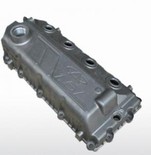
The chemical composition of ductile iron is characterized by high Ce, high C, high Si and low S, and the Mn and P leading to the fragility should be strictly controlled at a low content.Ductile iron below qt600-3 contains no alloying elements;Ductile iron above qt700-2 is often added with Cu and Mo.
Ductile iron is a type of cast iron that consists of graphite nodules distributed uniformly throughout the metal matrix. It has a unique combination of properties that make it superior to other materials in many industrial applications. The chemical composition of ductile iron plays a crucial role in determining its mechanical properties and overall performance.
One of the main characteristics of ductile iron is its high carbon content. Typically, it contains between 3.2% and 4.1% carbon, which gives it superior strength and hardness compared to other cast irons. However, unlike other high-carbon steels, ductile iron has a graphite microstructure that allows it to be more ductile and resistant to fracture.
In addition to carbon, ductile iron also contains significant amounts of silicon, manganese, and other trace elements. Silicon is present in the range of 1.8% to 4.0%, and it contributes to the formation of graphite nodules, which gives ductile iron its unique microstructure. Manganese is added to improve the hardenability of the metal, while trace elements such as sulfur and phosphorus are kept low to avoid brittleness and enhance its strength.
The chemical composition of ductile iron is carefully controlled during the manufacturing process to ensure that it meets specific industry standards and requirements. The addition of small amounts of alloying elements such as molybdenum, copper, and nickel can also be used to improve its corrosion resistance, wear resistance, or other specific properties.